OrgelwerkOrgelbouw / Gent

Organ builders / Ghent / since 1934

Cast, rolled,spoken to.

We pour our own pipe metal onto a sand bench, roll it round a mandrel, and then spend nine weeks making each pipe speak by itself.

How it is built
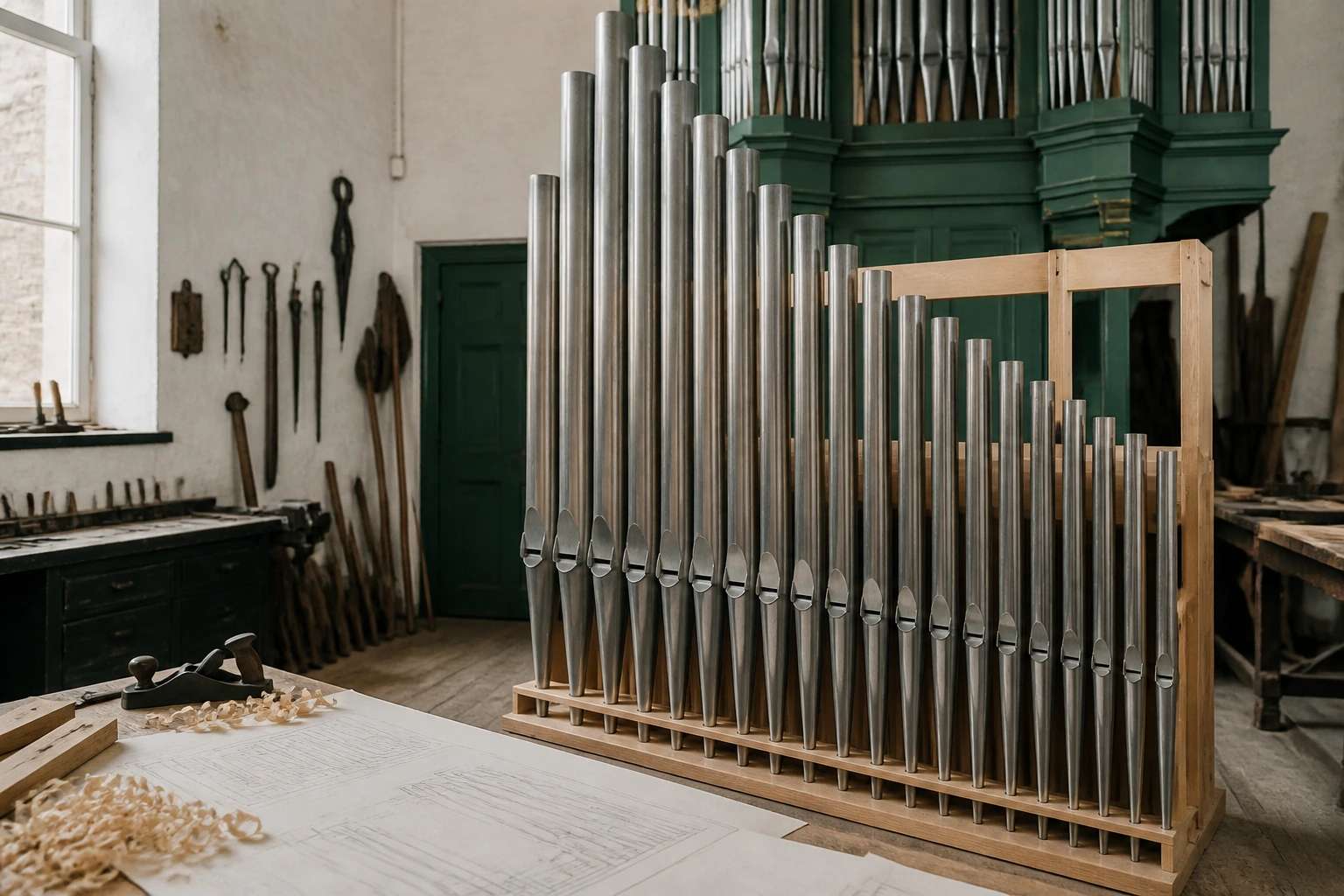
Ranks of tin organ pipes standing in a wooden rack in a tall workshop
A rank in the rack, waiting for a chest. Nothing is nicked, nothing is taped.

Twelve lengths

Speaking length, drawn to relative height. The mixture at the end is four ranks in one stop, which is why it is numbered rather than measured.

  1. 16′

    Bourdon

  2. 8′

    Prestant

  3. 8′

    Roerfluit

  4. 5⅓′

    Quint

  5. 4′

    Octaaf

  6. 4′

    Fluit

  7. 2⅔′

    Nasard

  8. 2′

    Doublette

  9. 1⅗′

    Tierce

  10. 1⅓′

    Larigot

  11. 1′

    Sifflet

  12. IV

    Mixtuur

An organ is the only instrument that is built into a room, and the room is not an acoustic afterthought — it is part of the instrument. That is why the last five weeks of every job happen on a ladder in a cold church rather than in a warm workshop.

Orgelwerk has built on the Nieuwevaart since 1934. Nine people: four on the bench, two on the metal, one in the drawing office and two who are almost always away voicing.

We cast our own pipe metal, which almost nobody does at this size any more, and it is the single decision the workshop has never once reconsidered.

Five stages

Thirty-three weeks for a two-manual instrument, of which fourteen are listening.
  1. 01

    Cast the metal

    Tin and lead poured onto a sand-covered casting bench and drawn off as a sheet, then planed to thickness by hand2 weeks
  2. 02

    Roll and solder

    Each pipe is rolled round a wooden mandrel and soldered along one seam, mouth cut afterwards6 weeks
  3. 03

    Build the chest

    Oak windchest, slider action, every channel made to fit the rank that will stand on it11 weeks
  4. 04

    Voice on the bench

    Every pipe spoken, listened to, adjusted at the languid and spoken again, one at a time9 weeks
  5. 05

    Voice in the room

    All of it again, in the building, because the room is part of the instrument and the workshop is not5 weeks
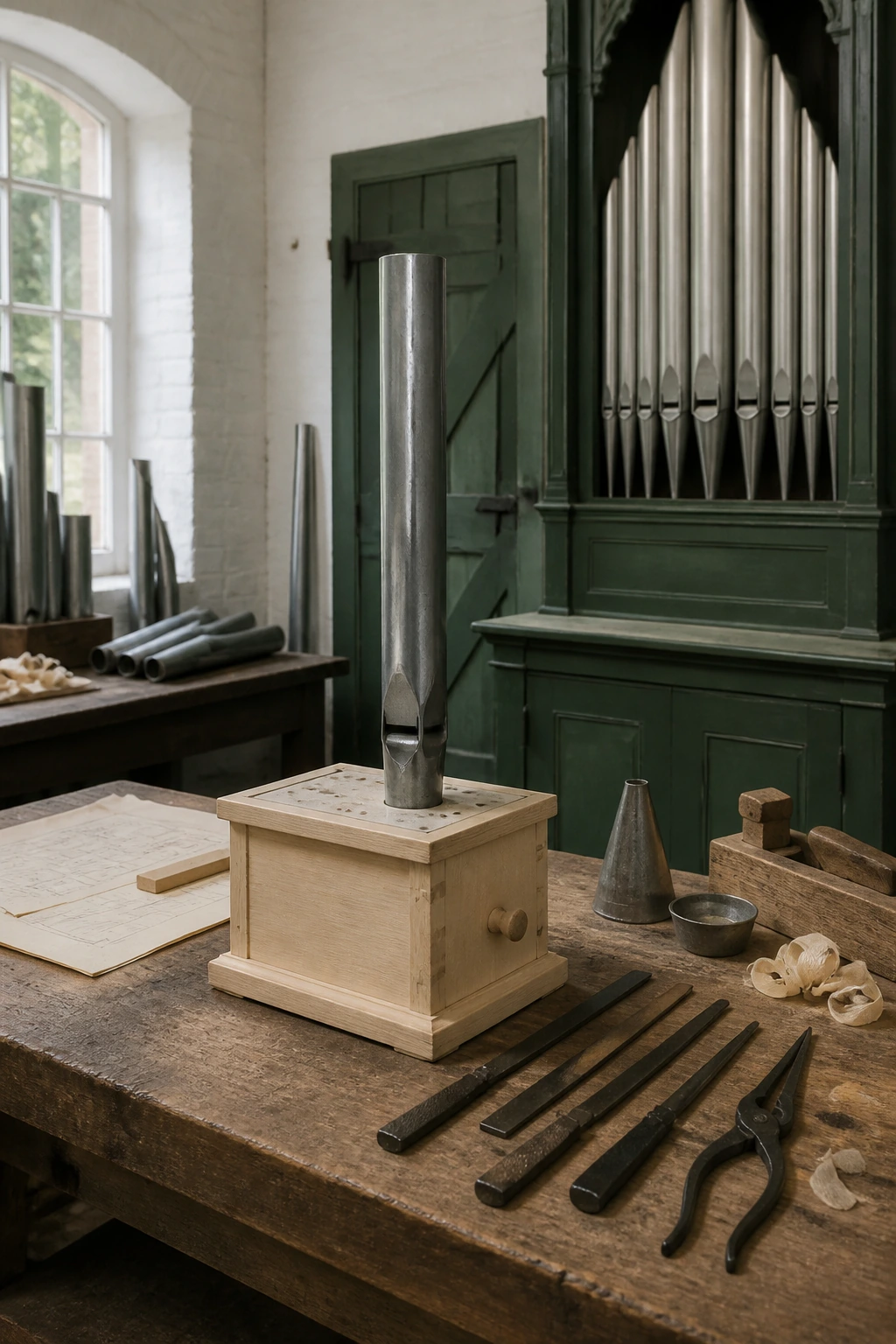
A voicing bench with a single organ pipe standing on a small windchest and hand tools beside it
The voicing bench. One pipe, one ear, and no hurry at all.
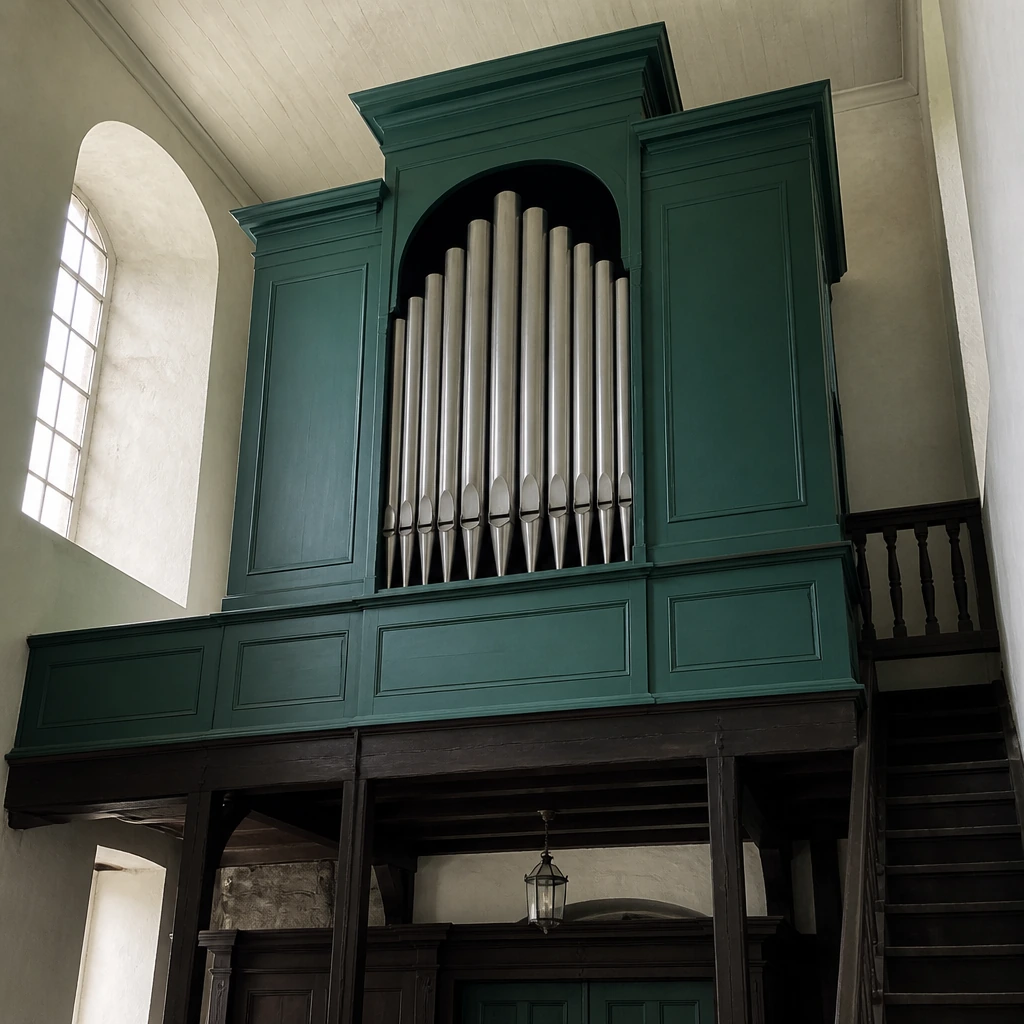
The upper case of a pipe organ in a church loft seen from below
In the loft at Damme. Restored, and left sounding like 1889.

Three refusals

Each of them makes an instrument slower to build and longer to last.

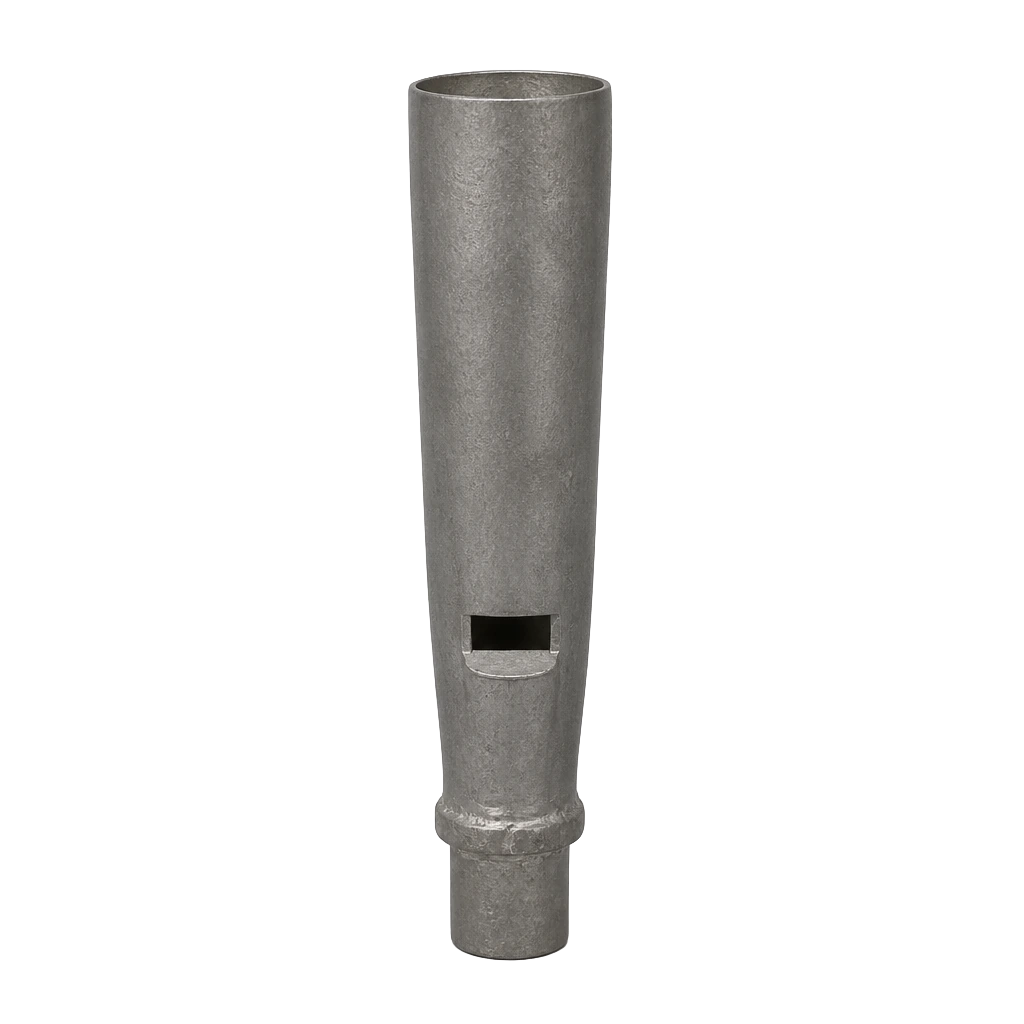
A single tin organ pipe with a soldered foot

I

We make our own metal

Bought pipe metal is rolled, and rolled metal has a grain. Cast metal does not, and it is the only reason a hundred-year-old front pipe still stands up straight.
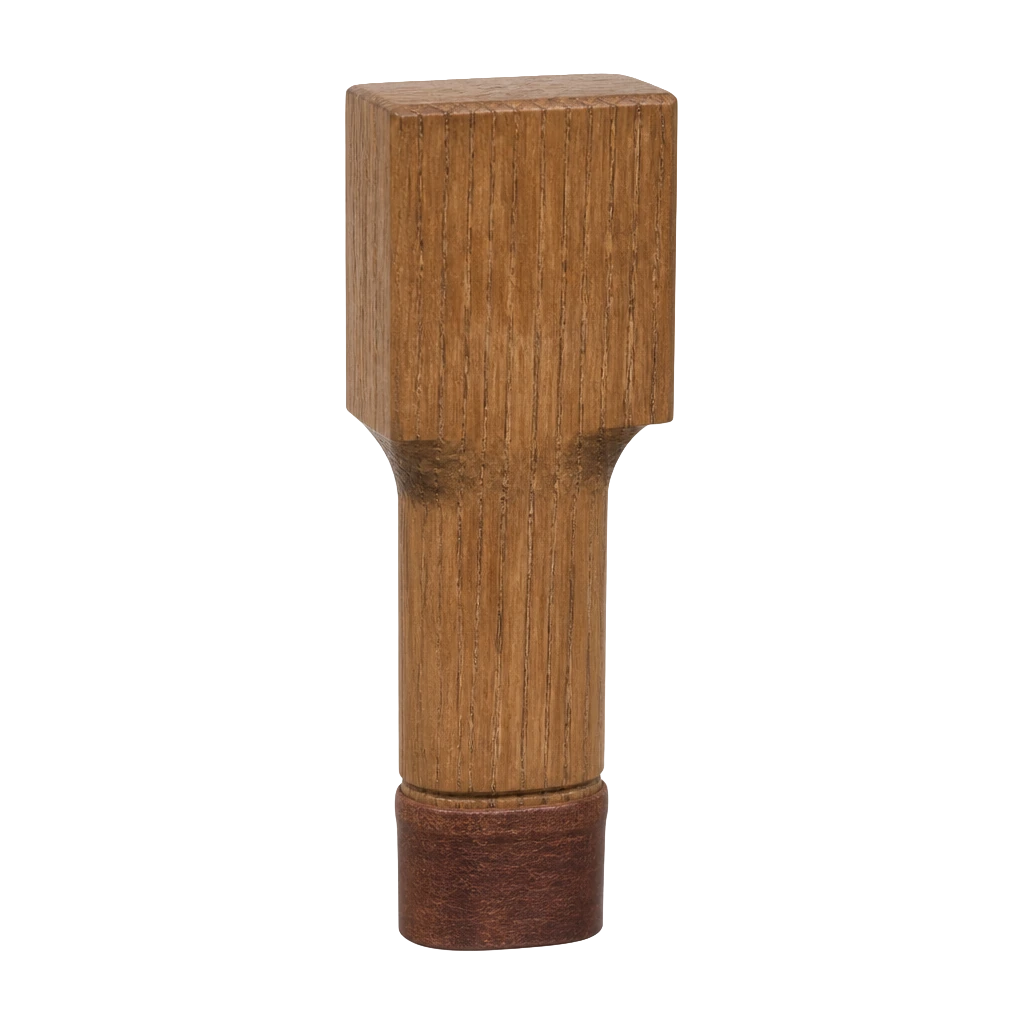
A wooden organ pipe stopper block with a leather-faced plug

II

Voiced twice

Once on the bench and once in the building. An organ voiced only in the workshop arrives sounding like a workshop, and no amount of tuning afterwards fixes it.
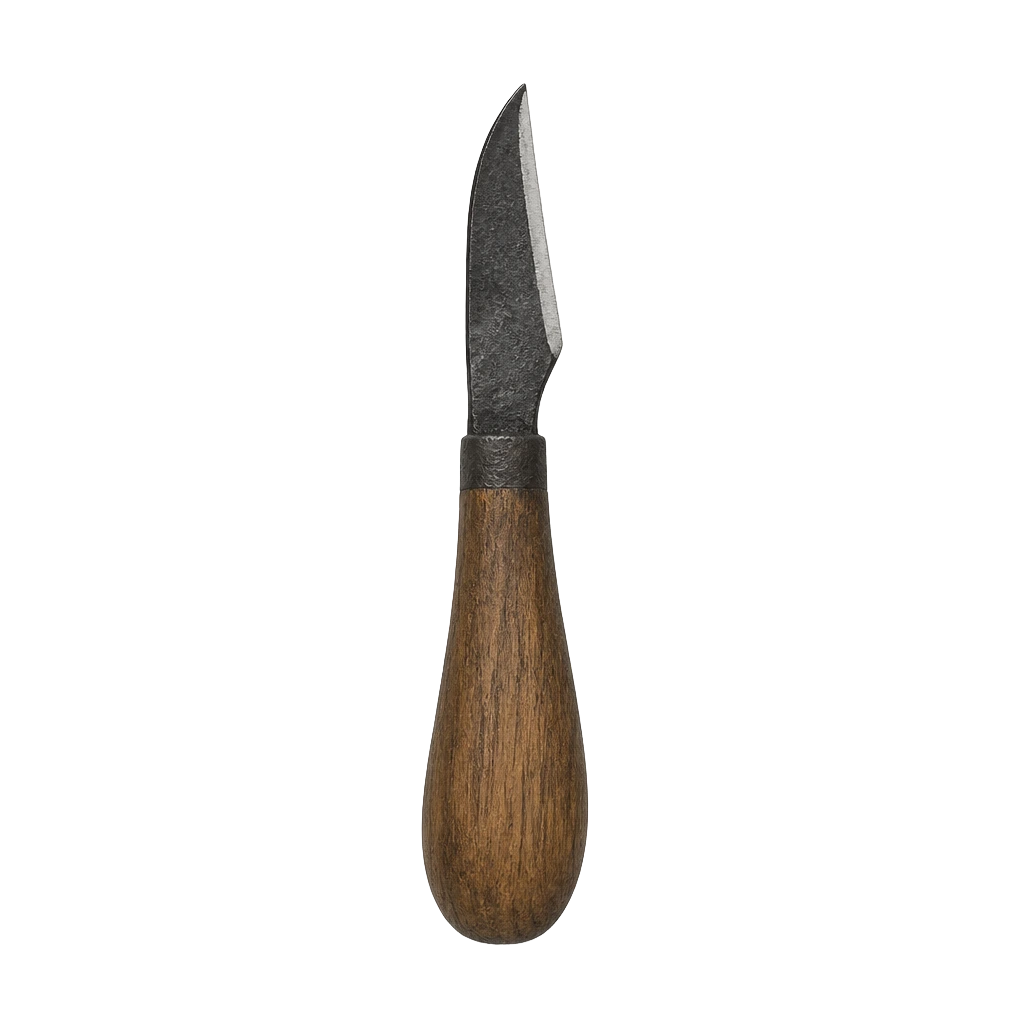
A small hand-forged voicing knife with a wooden handle

III

Nothing is nicked

No nicks in the languid, no tape on the flue. Every pipe is made to speak by its own geometry, which takes longer and is the whole difference.

The stop list

Roeselare, 2026. Twenty-two stops over two manuals and pedal, mechanical throughout.

  1. HoofdwerkPrestant 8′Cast tin, 75 %54 pipesFront, speaking
  2. HoofdwerkRoerfluit 8′Lead, chimneyed54 pipesStopped
  3. HoofdwerkOctaaf 4′Cast tin, 75 %54 pipesOpen
  4. HoofdwerkMixtuur IVCast tin, 75 %216 pipesBreaks at c′
  5. RugwerkHolpijp 8′Oak, stopped54 pipesWooden
  6. RugwerkFluit 4′Lead, conical54 pipesOpen
  7. RugwerkNasard 2⅔′Lead54 pipesOpen
  8. RugwerkTierce 1⅗′Lead54 pipesOpen
  9. PedaalBourdon 16′Oak, stopped30 pipesWooden
  10. PedaalPrestant 8′Cast tin, 75 %30 pipesFront, speaking
  11. PedaalTrompet 8′Tin, reed30 pipesFull-length resonator
  12. CouplersRW – HW, HW – PMechanicalShove coupler

You cannot voice an organ in a workshop. You can only stop it from being obviously wrong there.

Wim Descamps, voicing

Built and restored

A restoration keeps whatever the instrument already is. We do not improve them.

  1. 2026Sint-AmandskerkRoeselareNew, 22 stopsTwo manuals and pedal
  2. 2025Chapelle du BéguinageGhentRestoration, 1743Returned to mean-tone
  3. 2025ConservatoriumAntwerpNew, 14 stopsPractice instrument
  4. 2024Onze-Lieve-VrouwekerkDammeRestoration, 1889Romantic, kept as found
  5. 2024Private residenceBrugesNew, 6 stopsOne manual, no pedal
  6. 2023Sint-BaafskathedraalGhentChest rebuildAction only
  7. 2022Protestantse KerkKortrijkNew, 18 stopsTwo manuals and pedal
  8. 2021Abdij van AverbodeAverbodeRestoration, 1652The oldest we have touched

Living with one

Tuning
Twice a year, at the temperatures the building actually reaches.
Temperament
Yours to choose. We will argue for the historical one and then do as you ask.
Humidity
Between 45 and 65 %. Everything that ever goes wrong goes wrong outside that.
Waiting list
Three years for a new instrument. Restorations are quoted after a survey.

Surveys, quotations, tuning visits

werkplaats@orgelwerk.example

Nieuwevaart 118, 9000 Gent. Two of us are usually up a ladder somewhere, so a letter is answered faster than a telephone.