GlockenhofGlockengiesserei / Innsbruck

Bell foundry / Innsbruck / since 1782

One pour.Three hundred years.

Cast in loam, broken out of its own mould, and tuned by taking metal away until all five partials agree.

How a bell is made
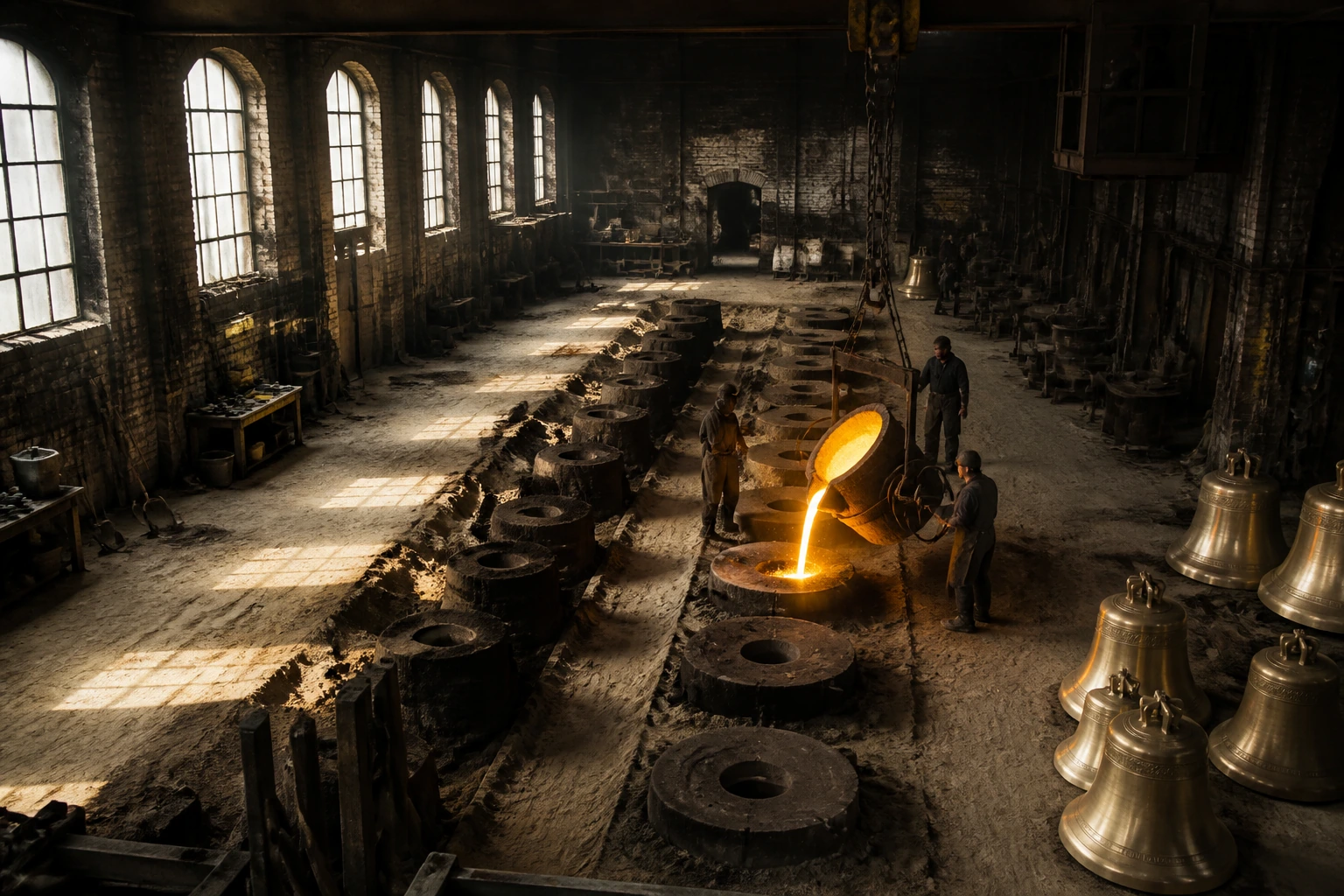
The casting hall of a bell foundry seen from a gantry, loam moulds set into a sand floor
The hall, moulds set into the floor. Nine of them, all different.

Eight bells

The peal at Wilten, drawn to diameter. Three of them are ours from 1782 and two are replacements for metal taken in 1943.

  1. C

    1960 mm
    4 780 kg
    1782

    01
  2. E♭

    1650 mm
    2 890 kg
    1782

    02
  3. F

    1480 mm
    2 060 kg
    1911

    03
  4. G

    1310 mm
    1 470 kg
    1782

    04
  5. A♭

    1230 mm
    1 180 kg
    1948

    05
  6. B♭

    1100 mm
    870 kg
    1948

    06
  7. C

    980 mm
    610 kg
    2004

    07
  8. E♭

    830 mm
    380 kg
    2004

    08

A bell is the only instrument that is finished by destroying part of it. You cast it deliberately too sharp, then cut metal out of the inside until five separate notes inside one lump of bronze fall into tune with each other.

Glockenhof has cast on the Höttinger Au since 1782, in loam, by the same method, with fourteen people and one crane that predates all of them.

We are not the cheapest way to get a bell and we have never pretended to be. What we sell is a casting that will still be in tune when everybody involved in ordering it is dead.

Five operations

Forty days of mould-making for one hour of pouring, and then eleven days of cutting it back.
  1. 01

    Strickle the loam

    The mould is swept, not carved: a shaped board turned on a spindle takes the profile out of wet loam9 days
  2. 02

    Build the false bell

    A clay bell is built on the core, dressed with tallow, and the cope is built over it14 days
  3. 03

    Bake and lift

    Fired for four days, the cope lifted, the false bell broken out, the void left is the bell6 days
  4. 04

    Pour

    Seventy-eight parts copper, twenty-two tin, at 1 150 °C, into a mould buried to the neck in sand1 hour
  5. 05

    Tune

    Mounted mouth-up and cut from the inside until all five partials fall where they should11 days
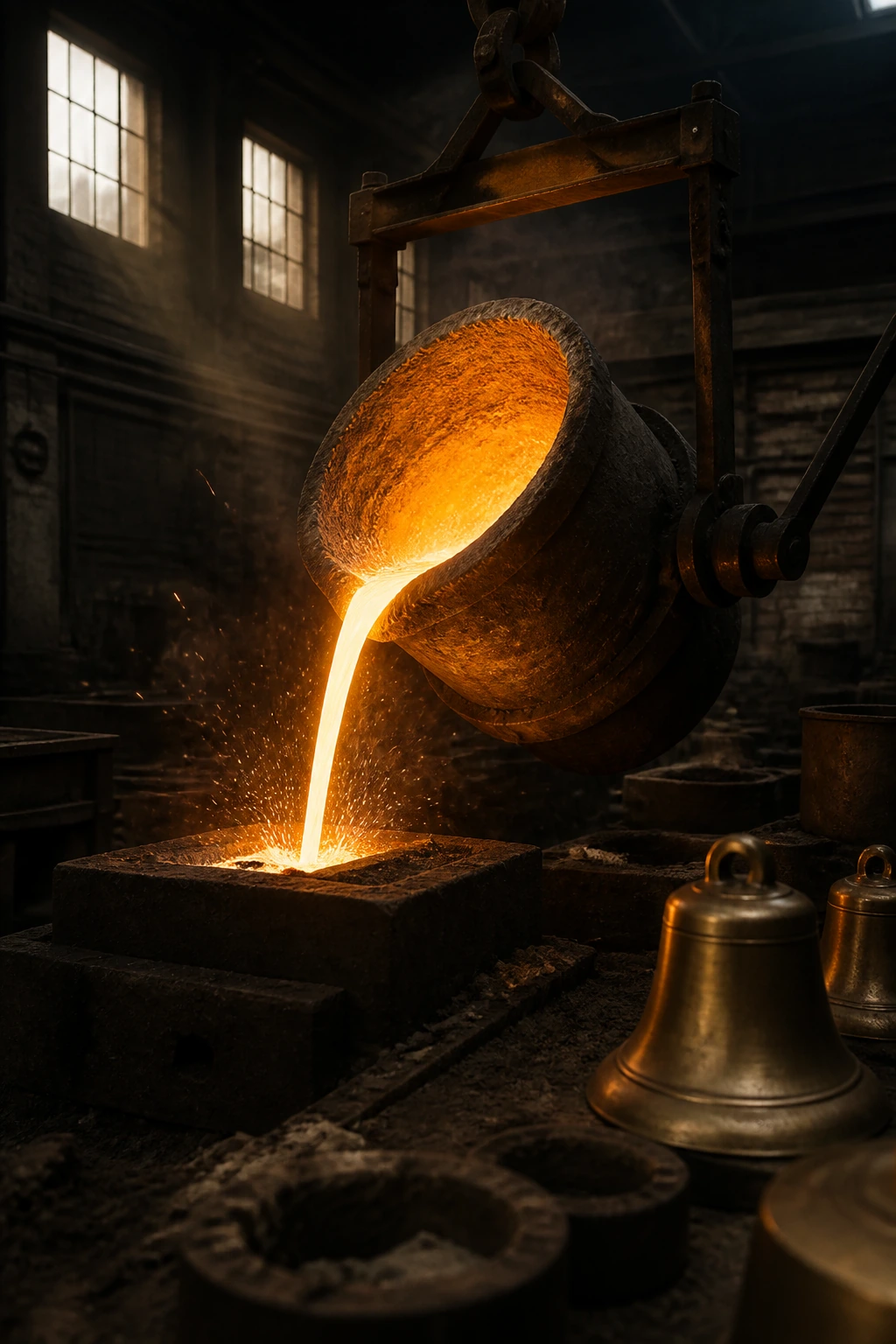
Molten bronze running from a tilted crucible into a mould in a dark foundry
1 150 °C. The mould is buried to the neck in sand for this.
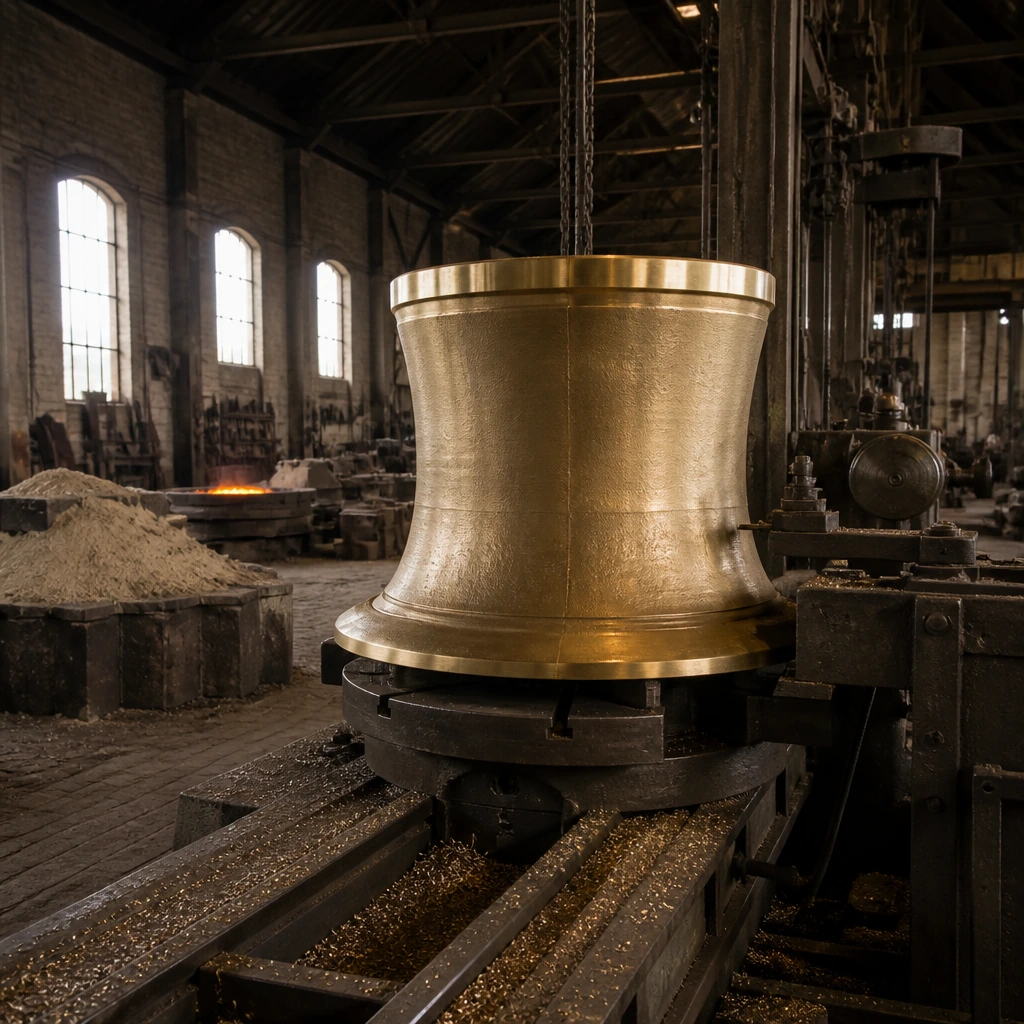
A large bronze bell mounted mouth-up on a tuning lathe with shavings on the bed
Mouth-up on the lathe. Everything from here is subtraction.

Three things that do not change

Two of them are physics. The third is a drawing in a locked cupboard.

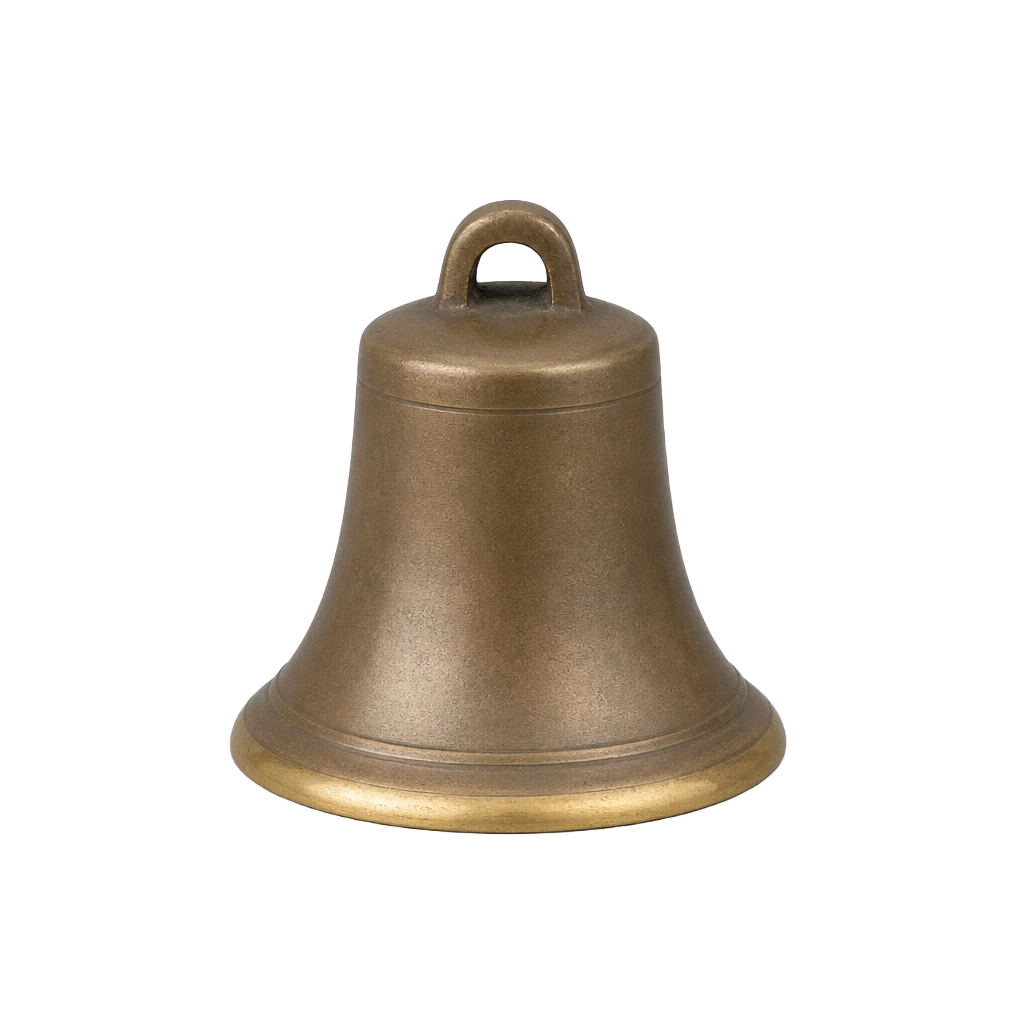
A small plain cast bronze bell

I

One pour, one bell

Nothing is cast twice from a mould. The loam is broken to get the bell out, which means every bell we have ever made had a mould made for it alone and no other.
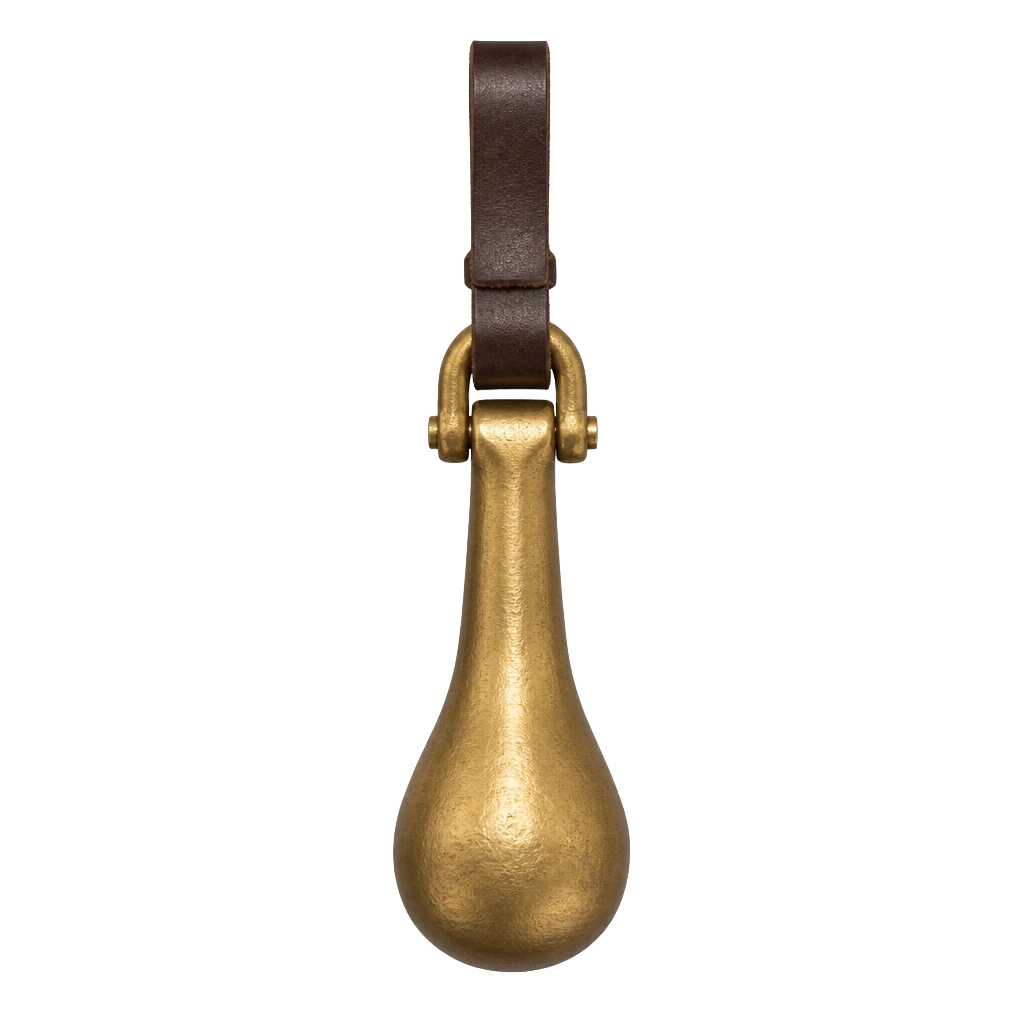
A forged bronze bell clapper on a short leather strap

II

Tuned by removing

A bell can only be made flatter. Every cut on the lathe is final, so the casting is deliberately sharp and the last eleven days are spent taking metal away from the inside.
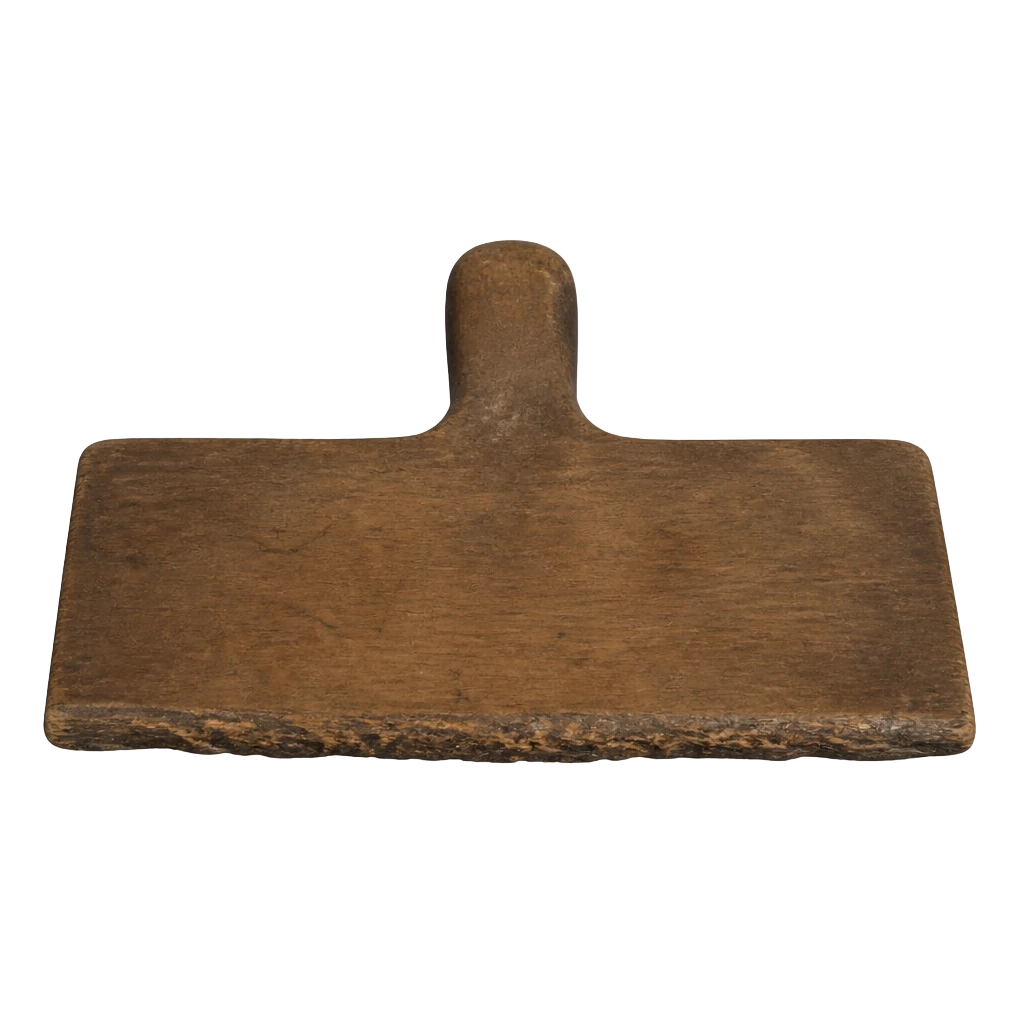
A wooden strickle board used to sweep a bell mould

III

The profile is not for sale

Our strickle boards are cut from a drawing revised eleven times since 1782 and never published. They are the only thing in the building that is locked away.

Cast here

Recent work. A recast keeps the old bell’s metal and, where we can read it, its inscription.

  1. 2026Stiftskirche WiltenInnsbruck1 470 kgG, four bells
  2. 2025Pfarrkirche SöldenÖtztal610 kgC, recast of 1734
  3. 2025Dom zu BrixenBrixen2 890 kgE♭, replacing 1943 loss
  4. 2024Klosterkirche StamsStams380 kgE♭, sanctus
  5. 2024RathausturmHall in Tirol870 kgB♭, hour bell
  6. 2023Kapelle St. MagdalenaGschnitz210 kgF, single
  7. 2023Pfarrkirche ZirlZirl4 780 kgC, the largest since 1911
  8. 2022Basilika AbsamAbsam1 180 kgA♭, third of five
  9. 2021FriedhofskapelleTelfs96 kgA, hand bell
  10. 2019UniversitätskircheInnsbruck2 060 kgF, recast of 1911

A bell out of tune with itself is not a bad bell. It is a very heavy mistake nobody can move.

Anneliese Ruetz, tuning

The five partials

What is cut, where, and how close it has to land. Every bell leaves with its own measured sheet.

  1. HumOne octave below−1 200 centsCut at the lip
  2. PrimeThe nominal itself0 centsCut at the waist
  3. TierceA minor third above+300 centsCut above the waist
  4. QuintA fifth above+700 centsCut at the shoulder
  5. NominalOne octave above+1 200 centsCut at the soundbow
  6. SuperquintA twelfth above+1 900 centsRarely touched
  7. Octave nominalTwo octaves above+2 400 centsNever touched
  8. ToleranceOn every partial± 2 centsMeasured, not judged
  9. AlloyCopper to tin78 : 22Assayed each melt
  10. TemperatureAt the pour1 150 °COptical pyrometer

Coming to a pour

Foundry
Höttinger Au 41, 6020 Innsbruck. Pours are announced a week ahead.
Watching
Anyone may watch a pour from the gantry. Children over eight, closed shoes.
Lead time
Fourteen to twenty months. The mould alone is a month of it.
Recasting
We will recast a cracked bell using its own metal, and we will tell you honestly whether it is worth it.

Commissions, recasts, tuning reports

Stand at the edge of a pour

Höttinger Au 41, 6020 Innsbruck. Twelve people, closed shoes, and an hour of nothing happening before the ninety seconds that matter. The office answers between eight and four, and nobody answers on the morning of a pour.