SilbersalzFotolabor, Leipzig

Hand processing / seit 1998

One film at a
time, in a tank,
by somebody.

Black and white, colour negative and transparency. Silver gelatin prints made under an enlarger by a person who looks at them.
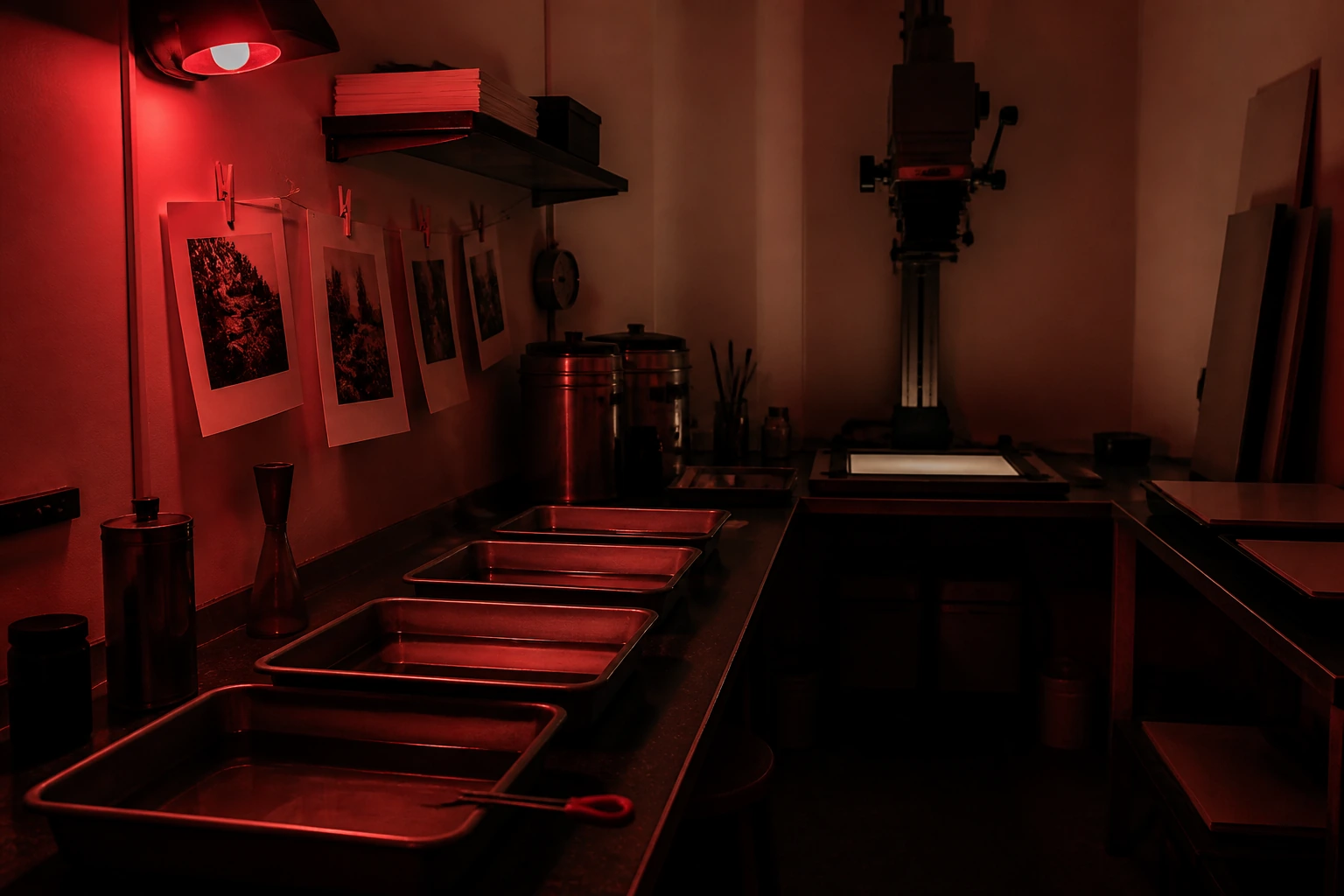
A darkroom under a red safelight with developing trays in a row and an enlarger
Darkroom 1. Three trays, one clock, no windows.

Developing

  1. 135B&W, hand tankID-11, 1+13 days€9
  2. 135C-41, dip and dunkStandard1 day€8
  3. 120B&W, hand tankID-11 or Rodinal3 days€10
  4. 120E-6, hand lineStandard5 days€14
  5. 4×5B&W, trayBy agreement5 days€6 / sheet
  6. 8×10B&W, trayBy agreement7 days€14 / sheet
  1. 18 × 24 cmFibre, glossy€28
  2. 24 × 30 cmFibre, glossy or matt€38
  3. 30 × 40 cmFibre, glossy or matt€54
  4. 40 × 50 cmFibre, matt only€86
  5. 50 × 60 cmFibre, matt only€128

Every print begins with a test strip and ends with somebody standing under the inspection light deciding whether it is finished.

Prices are for a straight print with normal dodging and burning. Anything that needs more than four operations on one sheet is quoted, and we will tell you before we start.

Fibre paper only. We stopped stocking resin coated in 2014 and have not been asked for it since 2017.
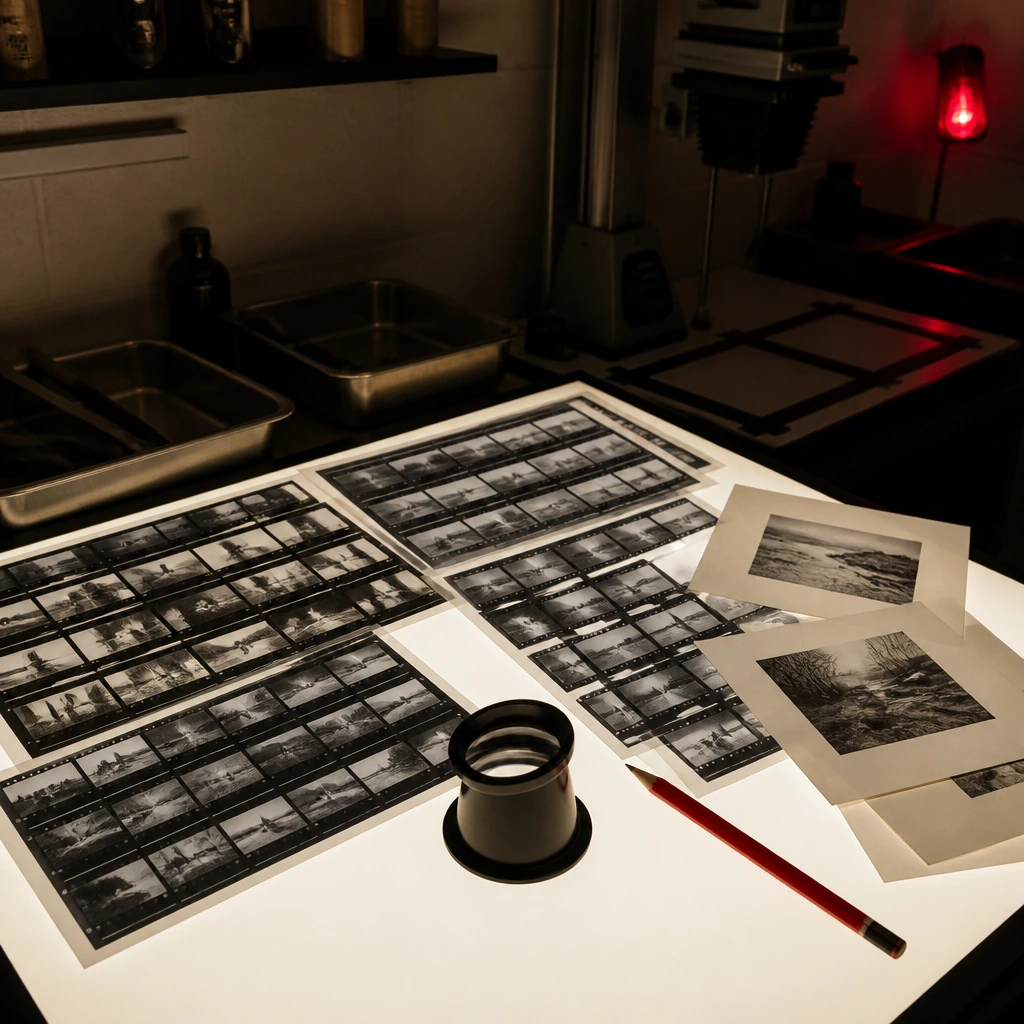
Contact sheets spread on a glowing light table with a loupe
Contacts come with every roll, whether you asked or not.
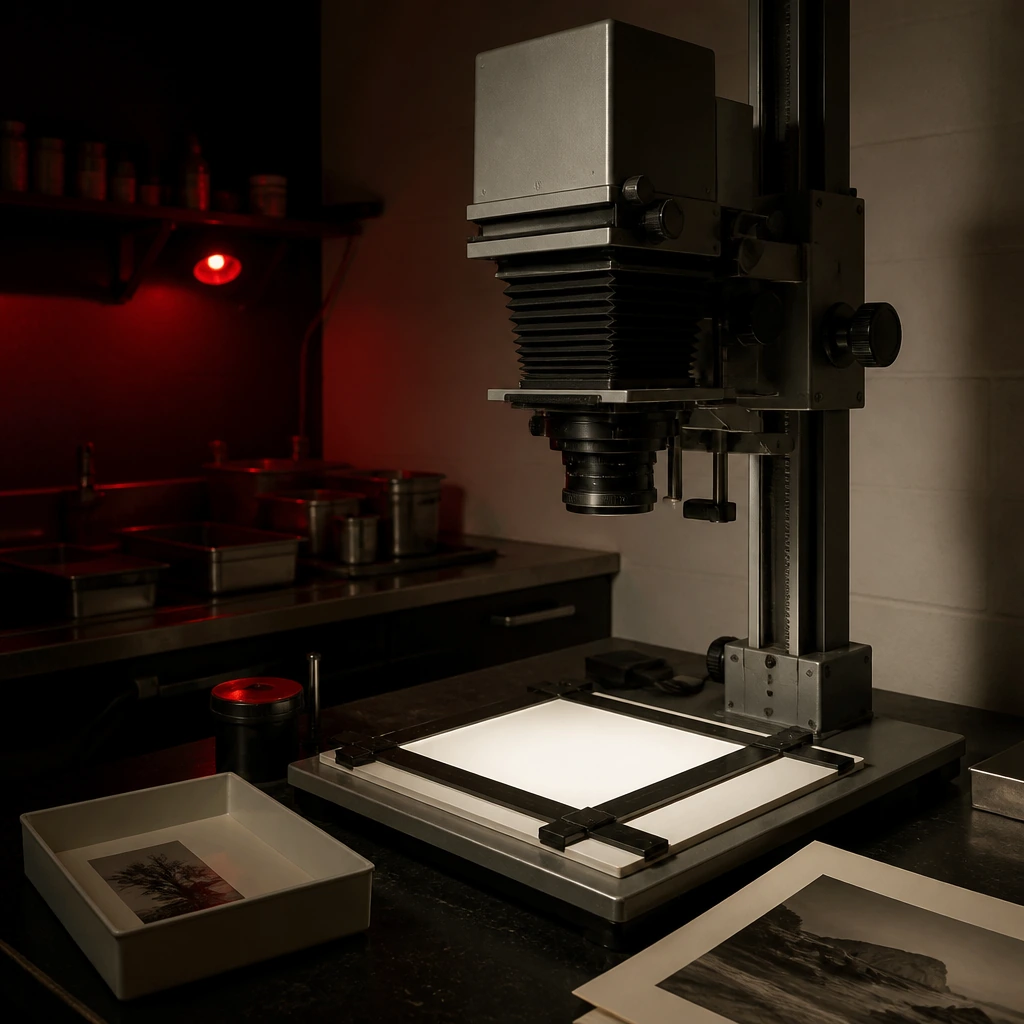
A large format enlarger standing on a bench with lens and bellows
Enlarger 2, 5×7, condenser head. Aligned in March.

Four house rules

  1. 01

    Everything by hand

    One person, one tank, one film at a time for black and white. It is slower than a machine and the negatives come back the way you exposed them.

  2. 02

    We keep your negatives dry

    Sleeved the same day, in polyester, never PVC. Collected or posted flat, never rolled.

  3. 03

    Test strip first, always

    Every print starts with a strip and a look under the light. Nobody here has ever printed to a number.

  4. 04

    The list does not move

    Prices last changed in 2019 and will change again when the paper does, not when the accountant asks.
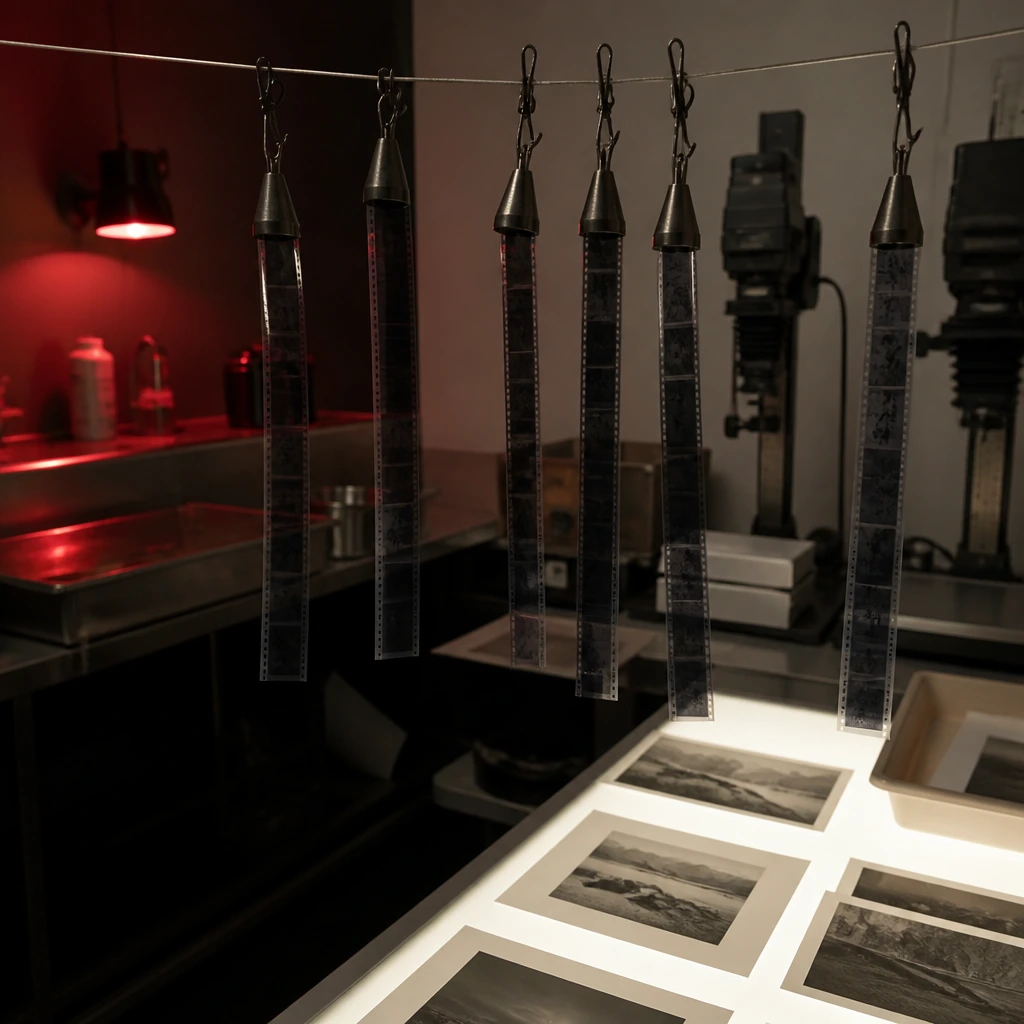
Strips of developed film hanging to dry from a line with weighted clips
Drying cabinet. Two hours, no heat, no hurry.

The counter

Lab
Karl-Liebknecht-Str. 62
04275 Leipzig
Open
Tue to Fri 11.00 to 18.00, Sat 11.00 to 15.00
Post
Send film in a padded envelope. We return it the same way.

Three things that ruin a negative

None of them happens in the camera, and all of them are avoidable.

01

Heat in transit

A film left in a car in July shifts before it is ever developed. Post it, or bring it; do not leave it on the parcel shelf for a fortnight.

02

Time in the tank

Thirty seconds either way at twenty degrees is nothing. Three minutes is a different film. This is why we do one at a time.

03

Water

Drying marks are the single most common fault we see on home-developed film, and they are permanent. Final rinse, wetting agent, hang, leave it.

What we stock at the counter

Small quantities, at roughly what we pay, because a lab with no film in it is a strange place.

  1. HP5 Plus135-36, 120400€7.50
  2. FP4 Plus135-36, 120125€7.20
  3. Delta 3200135-363200€10.90
  4. Portra 400135-36, 120400€14.80
  5. Ektachrome E100135-36100€18.40
  6. Ilford MG fibre24 × 30, 50 sheetsn/a€96

Sending film in

How should I post it?
A padded envelope, canisters in a freezer bag, and a note with your name in the bag rather than only on the outside.
Do you push and pull?
Two stops either way on black and white, one on colour negative. Tell us on the note; we cannot tell by looking.
Will you scan as well?
Yes, at two sizes, but we would rather make you a print. A scan is a proposal; a print is a decision.
What happens to a blank roll?
We tell you, we do not charge you, and we say what we think went wrong. It is nearly always the film not catching on the take-up spool.