Cobalt WorksDry pigment, Sheffield

Est. 1911 / Attercliffe

Colour is a
material before
it is an effect.

We mill dry pigment and sell it by the kilo, unbound and unadulterated. What you do with it afterwards is your business.
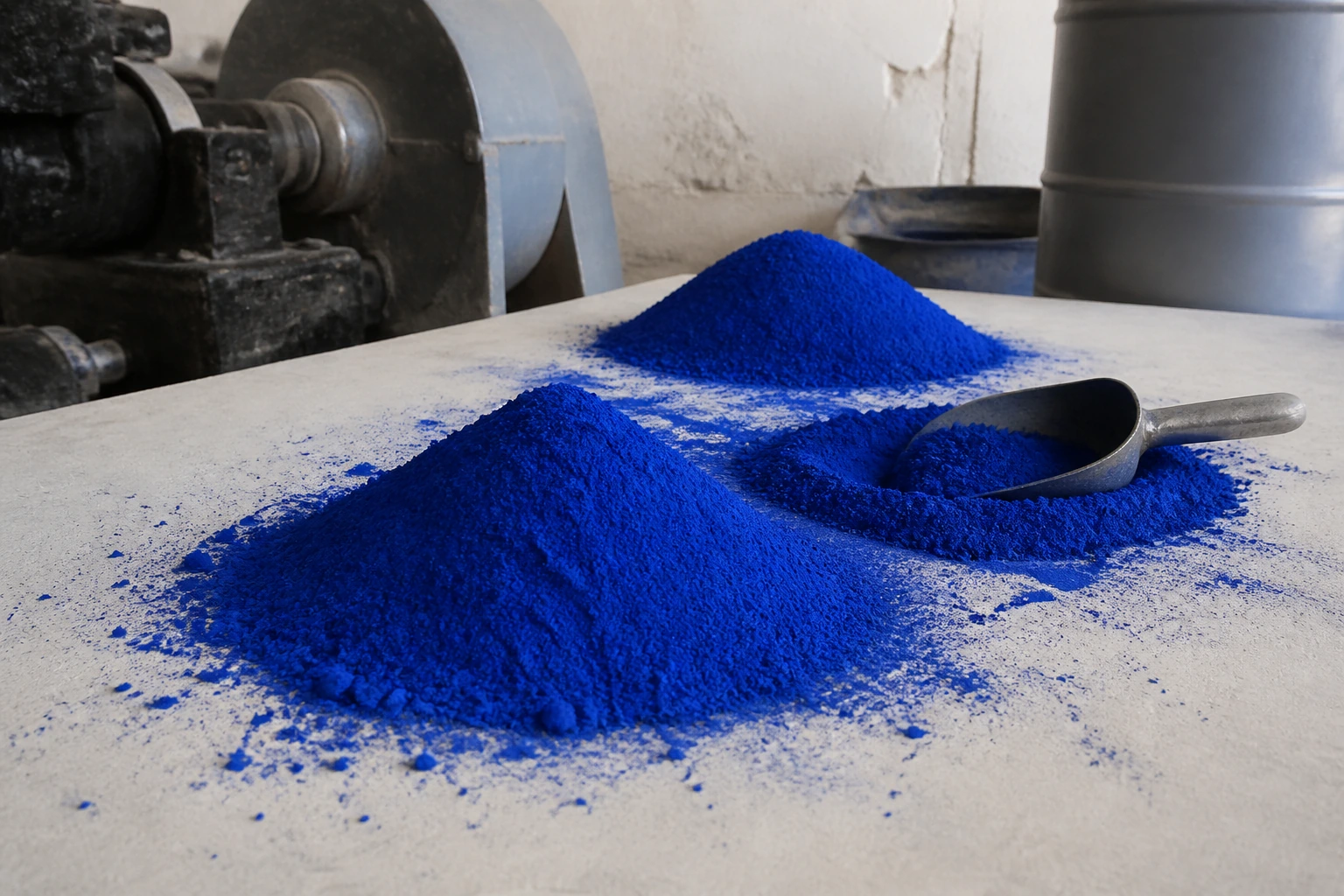
Heaps of intense dry blue pigment powder on a pale worktop
PB 28, batch 26-114. Ground to 4 µm on Tuesday.
1911
Milling since
11
Blues in stock
4 µm
Finest routine grind
1 kg
Smallest order

In stock this week

  1. PB 28Cobalt BlueBlueSynthetic oxide4 µm£142 / kg
  2. PB 29UltramarineBlueSynthetic3 µm£38 / kg
  3. PB 27Prussian BlueBlueSynthetic2 µm£46 / kg
  4. PB 15Phthalo BlueBlueOrganic1 µm£52 / kg
  5. PBr 7Raw Umber, CyprusEarthNatural, washed9 µm£18 / kg
  6. PY 43Yellow Ochre, RoussillonEarthNatural, levigated11 µm£24 / kg
  7. PR 102Red Oxide, SinopiaEarthNatural, calcined8 µm£21 / kg
  8. PBk 9Bone BlackBlackCalcined bone5 µm£29 / kg

Four steps, eleven days

  1. I

    Source

    Earths from six quarries we have bought from for longer than any of us has worked here. Synthetics from two makers, both named on the label.

  2. II

    Wash and levigate

    Natural earths are settled through four tanks over eleven days. What comes out of the last tank is what we sell.

  3. III

    Mill

    Roller mill for the earths, jet mill for anything under 3 µm. Grind is measured on every batch and printed on the tin.

  4. IV

    Draw down

    Every batch is drawn down beside the retained standard in daylight. If a colourist can see the difference, the batch goes back.
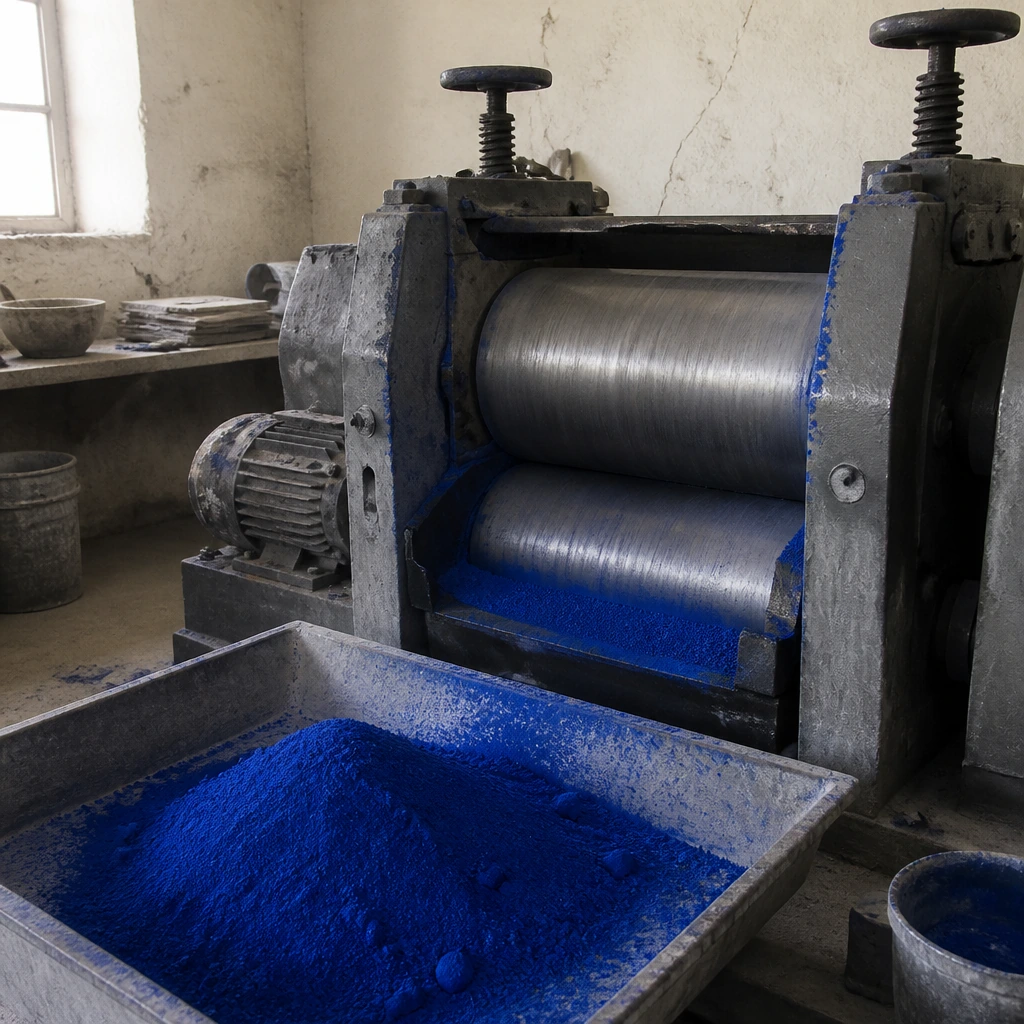
An industrial roller mill grinding blue pigment in a workshop
Number 3 roller mill, in service since 1957.
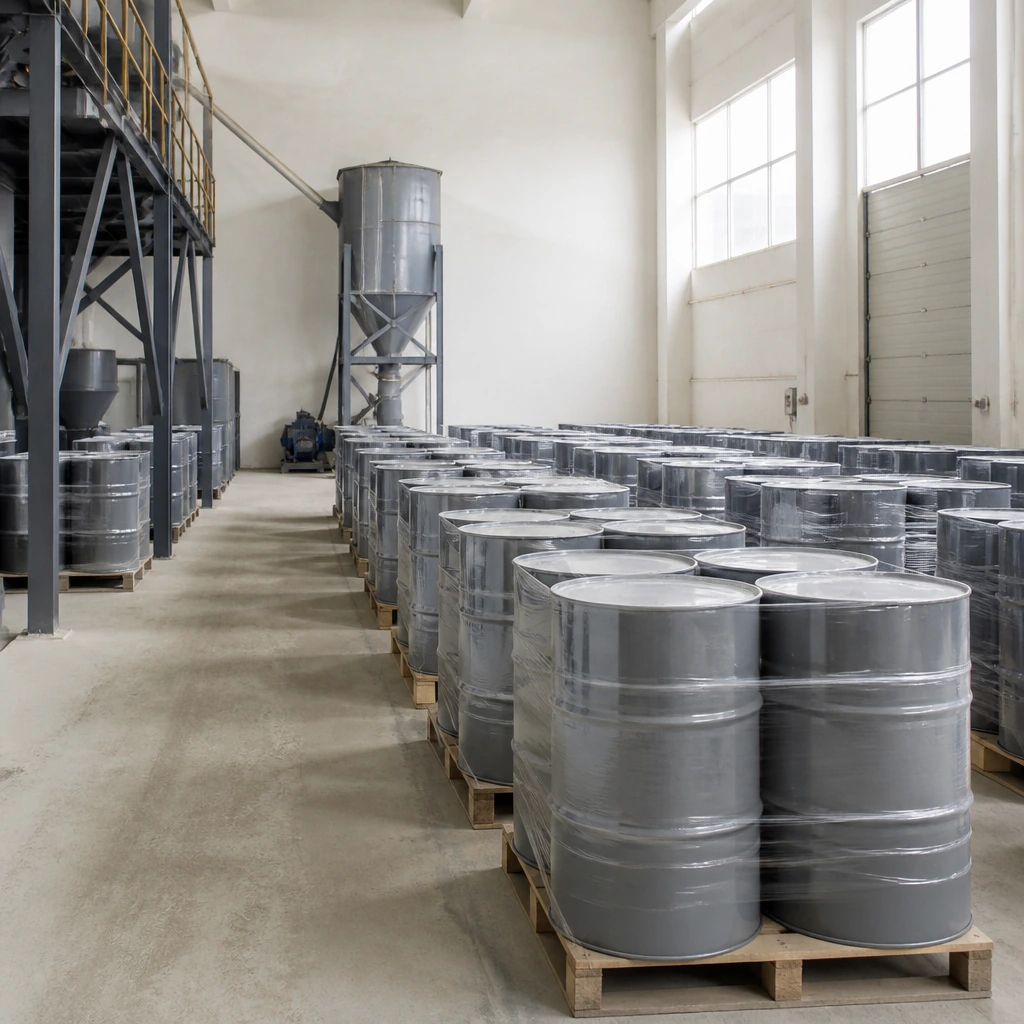
Rows of sealed steel drums on pallets in a bright warehouse
Bay 2. Everything here is sold by weight, not by story.

Matching

Send a chip, a fragment, or a photograph of a wall you cannot remove. We will mill against it and send three drawdowns before you commit to a kilo.

Conservation work is quoted separately and always includes the analysis: what we think the original was, how confident we are, and what we would use instead if the original is now illegal.

We do not tint to a screen value. If your reference is a hex code, we will ask you for something physical first.
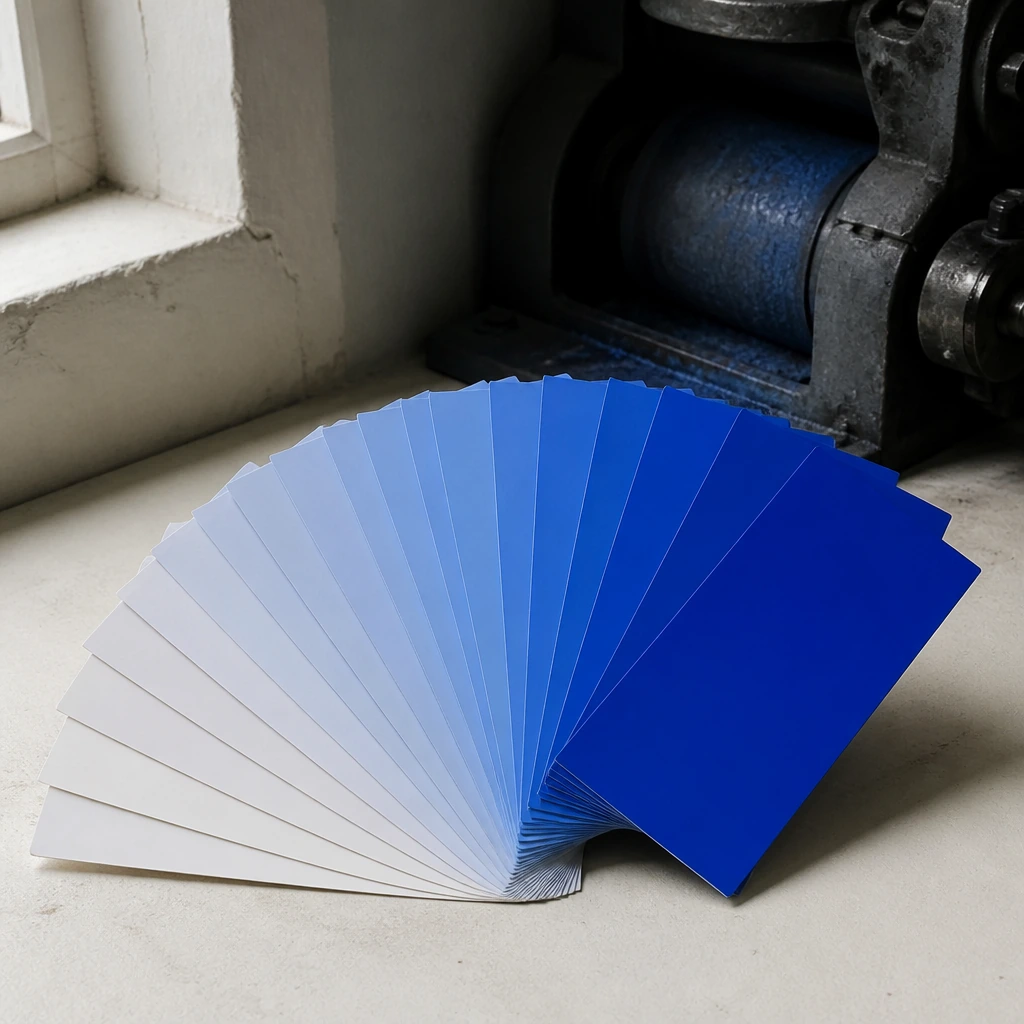
A fan of painted colour chip cards ranging from pale to deep blue
Standards for PB 28, drawn down in daylight, kept for forty years.

Ordering

Works
Effingham Lane, Attercliffe
Sheffield S9 2QP
Counter
Mon to Thu, 08.00 to 16.00. Bring a container.
Post
1 kg minimum, 25 kg maximum per parcel.

Three ways a pigment goes wrong

Not adulteration, which is rare. These are the everyday faults that make a batch unusable.

01

Grind drift

Two microns coarser and the same pigment reads paler and chalkier. Grind is measured on every batch and printed on the tin.

02

Moisture

Earths take up water and cake. Warehouse bays are checked weekly and anything above six per cent goes back through the dryer.

03

Settling

A tinted mix separates in the tin. That is the pigment behaving, not failing, and it is why we sell dry and let you bind it.

Binders we stock

Sold alongside the pigment because people ask, and because the wrong binder wastes good colour.

  1. Linseed, cold pressedOil paint1 L£24
  2. Stand oilGlazes500 ml£19
  3. Gum arabic, solutionWatercolour500 ml£16
  4. Rabbit skin glueDistemper, size1 kg£31
  5. Casein powderLimewash, secco1 kg£28
  6. Acrylic dispersionModern media1 L£22

Ordering questions

Is one kilo really the minimum?
Yes, and it always has been. A cutting quantity is how people find out whether they want twenty-five.
Can you match a historic colour?
Send a chip or a fragment. We will mill against it and send three drawdowns, with a note on what we think the original was.
Are your earths natural?
The ones marked natural are washed and levigated only. The synthetics say so on the label, with the maker named.
Do you ship abroad?
Within Europe, yes, up to 25 kg a parcel. Some pigments are restricted in some countries and we check before taking money.